
Buy Best Off-Page SEO Services That Actually Rank
 If you have ever bought “off page SEO” and felt basically nothing happened. No ranking lift. No extra traffic. Maybe a weird spike, then a slow fade. You are not crazy.
Most off page SEO services are built to sell something that looks measurable (links, DA, DR, counts, packages) not something that consistently moves a real site up a competitive SERP.
This guide is what I’d want someone to hand me before I spent a dollar. What to buy. What to avoid. What “actually ranks” looks like in 2026, and how to do it without blowing up your link profile.
Why Most “Off-Page SEO Services” Don’t Move Rankings
Off page SEO is not “buy links and pray”.
The whole point is authority plus trust plus relevance. Over time. In a way that looks natural because it is natural. Or at least close enough that it blends into the web, instead of sticking out like a sore thumb.
The market problem is simple. A lot of sellers are resellers. They do not have relationships. They do not do real outreach. They buy from a vendor who buys from a vendor who has a spreadsheet of sites that exist mostly to sell links.
So you end up with stuff like:
- PBNs dressed up as “guest posts”
- Spammy guest posts on sites that publish anything for $30
- Sitewide and footer links that scream paid placement
- Fiverr style blasts that drop your URL into random places that have nothing to do with your niche
- Niche edits on pages that are already link farms, just rotated anchors every week
And then people wonder why it fails.
It fails because Google is not grading you on the number of backlinks. It is grading you on the neighborhood you keep, and whether those mentions make sense.
Common failure points I see all the time:
- Low quality link neighborhoods: the linking sites have outgoing link footprints to every industry under the sun
- Unnatural anchor ratios: way too many exact match anchors, or the same commercial phrase repeated
- No topical relevance: a “fitness” site links to your B2B payroll software page, somehow
- No indexing: the page that “linked to you” never gets indexed, so the signal is tiny or zero
- No reporting: you get a list of URLs and that’s it, no context, no metrics, no monitoring
- No strategy: links point to random pages, not the pages you actually need to rank
The promise of this article is pretty straightforward.
I’m going to show you what off page services that actually move rankings look like, which types are safest, what questions to ask, and how to buy without getting stuck with a toxic footprint you later have to clean up.
What “Off-Page SEO” Actually Means in 2026 (Beyond Just Backlinks)
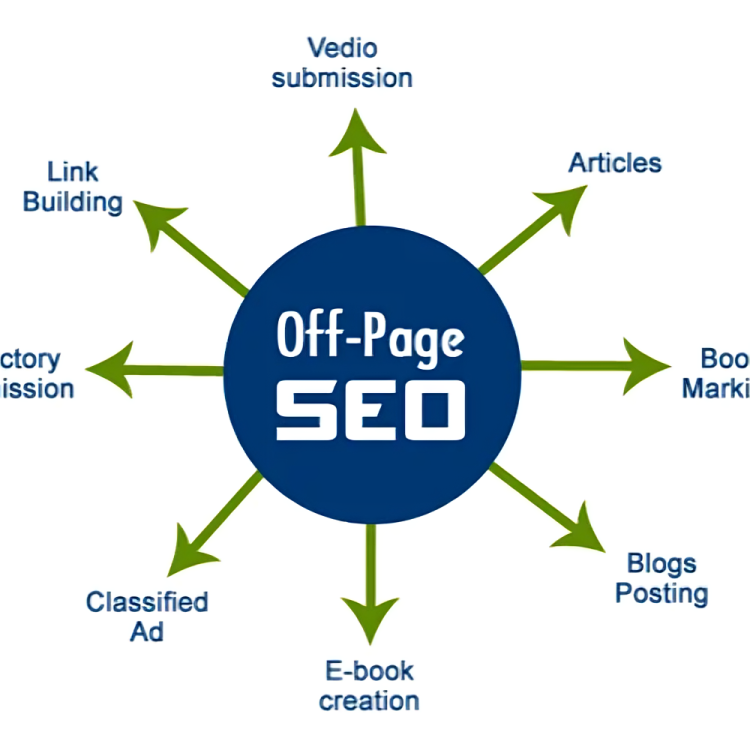
Off page SEO is every signal that happens outside your website that influences how search engines perceive your authority, trust, and brand legitimacy.
Backlinks are still a core piece. But they are not the whole game, and in 2026 it’s even more obvious.
Here are the big buckets that matter:
- Backlinks: editorial mentions, contextual links, citations, resource links, partnerships
- Brand mentions (linked or unlinked): your company name showing up in relevant places
- Digital PR: news, industry publications, podcasts, thought leadership, data stories
- Citations (local SEO): consistent NAP mentions for local businesses, directories that matter, local press
- Reviews and reputation: velocity, sentiment, response behavior, platform diversity
- Content distribution: getting your best assets in front of people who can cite them
- Entity signals: consistent brand identity, authorship, associations, and co mentions across the web
Also worth clarifying what off page is not.
- On page SEO: content quality, intent match, internal links, titles, headers, schema, UX basics
- Technical SEO: crawlability, indexation, performance, site architecture, canonicals, redirects
Off page should connect to outcomes you can feel, not just screenshots.
The outcomes to care about:
- better rankings for target pages
- more qualified referral traffic
- more branded searches (this is a sneaky big one)
- higher conversion rate because users trust the brand more
The Real Criteria for “Best” Off-Page SEO Services (My Non-Negotiables)
If you’re shopping for off page SEO, the word “best” is meaningless unless you define it.
Here’s my non negotiable list. If a vendor fails these, it’s a no. Even if they have pretty case studies.
1) Relevance first, always
Topical alignment and audience overlap beat raw DA or DR.
A DR 35 site that is actually in your niche and has real readers can help more than a DR 70 general site that publishes anything for money. Relevance also lowers risk because the mention makes sense.
2) Quality control, not just metrics
I want real sites.
- real traffic, not just inflated DR
- normal looking outbound link patterns
- editorial standards (the content is readable, not spun)
- clean history (no obvious expired domain flip with 10 different topics in 12 months)
3) Transparency in the process
A good provider can explain what they will do before they take your money.
- pre approval options for prospects, at least on higher tier placements
- sample placements that look like what you will actually get, not one cherry picked unicorn
- clear reporting that ties back to goals
4) Risk management built in
No PBNs. No hacked links. No automated comment spam. No undisclosed networks. No “we have our own portfolio of sites” that they refuse to show.
Also, I want anchor planning. Not aggressive exact match anchors sprayed across new domains.
5) Measurable deliverables
At minimum, reporting should include:
- linking URL and target URL
- anchor text used
- follow or nofollow (and sponsored/ugc if applicable)
- placement type and context (guest post, mention, resource, citation, etc)
- publish date
- basic traffic estimate for the linking page or domain
- indexing checks and link monitoring
If they can’t produce that. They’re not running a serious campaign.
Off-Page SEO Services You Can Buy (And What Each One Is Best For)
Not every off page service fits every site. Some are great for authority jumps. Some are great for local trust. Some are basically only safe in small doses.
Here’s the practical breakdown.
1) Editorial guest posting
Best for: steady link velocity, niche relevance, supporting category pages and informational assets.
When guest posting works, it’s because it’s actually editorial. Meaning the site has standards, real readers, and the link is placed because the content adds value.
When it gets risky is when “guest post” really means paid placement on a site that exists to sell guest posts. Those sites usually have:
- high outbound link volume
- random topic coverage
- thin content
- obvious footprints like “write for us” plus 10,000 posts
If you buy guest posts, insist on relevance and real traffic. And do not overdo money anchors. Branded and natural anchors should be the default.
2) Digital PR and HARO style outreach
Best for: authority jumps, trust signals, brand credibility, earning natural links that competitors struggle to replicate.
This is the stuff that can change your site’s perceived legitimacy.
Digital PR is not just “send a press release”. It’s pitching angles that writers actually want. Data, commentary, unique stories, contrarian takes with proof. When it lands, you can earn links from real publications and real journalists.
HARO style outreach (and similar journalist request platforms) can also work, but it’s more competitive now. The people who win tend to be fast, specific, and quotable. And they have a decent brand footprint already.
3) Review and reputation support
Best for: local businesses, service businesses, healthcare, home services, anywhere trust drives clicks and conversions.
This is not about faking reviews. Please don’t.
Ethical review velocity looks like:
- setting up a consistent request flow (email, SMS, in person prompts)
- responding to reviews, especially negative ones, in a human way
- improving profiles across key platforms (Google Business Profile, industry specific sites)
The ranking lift here is often indirect. Better reviews improve conversion rate, which improves performance signals, and your local pack visibility can follow.
4) Brand mention and link reclamation
Best for: quick wins, cleaning up leaks, turning existing awareness into authority.
Two big plays:
- Unlinked mention reclamation: your brand is mentioned, but not linked. Ask nicely, make it easy, provide the exact URL.
- Broken backlink recovery: find backlinks pointing to old URLs, 404s, redirected chains, outdated pages. Fix with redirects or ask for an update.
This is one of the cleanest off page tactics because you’re not inventing anything. You’re correcting something that should have been a link anyway.
5) Competitor link gap replication
Best for: closing the gap in competitive SERPs where you’re clearly under linked.
If the top 5 results all have certain types of links (industry lists, directories, associations, tools pages, resource pages), that’s not random. It’s the link ecosystem of that SERP.
A good service will:
- map competitor referring domains that actually matter
- filter out junk and irrelevant links
- prioritize links you can realistically earn
- replicate patterns while still diversifying
This is one of the most practical ways to spend money because you’re building what’s already proven to correlate with ranking in your exact niche.
A Simple Buying Framework: How to Pick the Right Off-Page Plan for Your Site
This is the part most agencies skip. They sell the same package to everyone.
Step 1: Identify your site type
Be honest. The risk profile is different.
- local business (plumber, dentist, lawyer)
- affiliate site
- SaaS
- eCommerce
- service business (B2B, consultants, agencies)
Step 2: Define the goal
Pick one primary goal per quarter.
- rank a specific page
- grow overall authority (so everything lifts)
- recover after a traffic drop
- expand into new keyword sets
Step 3: Match tactics to the goal
A couple example mixes that tend to work.
If you’re SaaS:
Digital PR plus linkable assets plus selective niche relevant editorial placements. You want branded demand and authority, not just links to a pricing page.
If you’re affiliate:
Heavy relevance plus linkable assets plus controlled editorial placements, extra caution on anchors and velocity. Affiliates can rank, sure, but they also get scrutinized faster if the link graph looks manufactured.
If you’re local:
Citations plus local PR plus a few niche relevant placements, and reputation work. Local wins are often boring. Consistency beats cleverness.
Step 4: Decide where links should point
If a vendor can’t talk clearly about target pages, that’s a tell.
In many cases, you should build links to:
- linkable assets (guides, tools, stats pages)
- category pages (for eCommerce)
- key service pages (but not exclusively)
- about page or homepage with branded anchors (yes, this still matters)
Step 5: Set a realistic cadence
Off page SEO is compounding. You want a steady pace you can maintain, not a 50 link month followed by silence.
Also, content readiness matters. If you don’t have anything worth linking to, you end up forcing links to mediocre pages and wondering why it doesn’t stick.
The Red Flags: How to Spot Risky Off-Page SEO Services Before You Pay
If you only read one section, make it this one.
- Guaranteed rankings or “#1 in Google” promises. Nobody can guarantee that, and the ones who try usually use tactics you’ll regret later.
- Packages defined only by DA/DR. Metrics are a filter, not a strategy. Relevance should be non negotiable.
- Refusal to share sample sites. Or they only show a handful of perfect examples that look nothing like what you’ll receive.
- Over optimized anchors. If they push exact match anchors aggressively, run. Especially for finance, health, gambling adjacent niches.
- Bad neighborhoods. If their sample sites have casino, pharma, adult, crypto spam sprinkled in the outbound links, it’s a no.
- No reporting, no monitoring, no replacement policy. Links get removed. Pages get deleted. Sites change. If they don’t plan for that, you’re paying for something temporary.
It’s crucial to remember that link building is an essential part of your off-page SEO strategy and should be approached with care and consideration.
What to Ask Before Buying (A Quick Checklist You Can Copy-Paste)
Copy paste this into an email or a call agenda.
- Do you do a backlink audit and anchor plan first?
- Will placements be on real sites with real traffic? How do you verify traffic and quality?
- Can I see sample sites and recent placements in my niche before I pay?
- What is your replacement policy if a link is removed or a page de indexes?
- How do you report deliverables (URL, anchor, follow/nofollow, placement type, publish date, basic traffic metrics)?
- How do you handle indexing and link monitoring?
- Do you use PBNs, link networks, hacked links, or automated placement methods? (I want a clear no.)
- Do you offer pre approval for prospects, or at least category level approval?
- What is your stance on anchor text, especially exact match anchors?
- Where will links point, and why those pages?
If they get defensive, vague, or they answer with pure marketing fluff. That’s information.
What a “That Actually Ranks” Off-Page Campaign Looks Like (30/60/90 Days)
Real off page SEO looks a little boring from the outside. Lots of analysis, lots of filtering, lots of small wins stacking.
Here’s a clean 90 day structure.
First 30 days
- backlink audit and anchor text review
- competitor analysis (link types and link velocity, not just counts)
- mapping linkable assets and content gaps
- prospecting and qualification (traffic, relevance, outbound patterns)
- first placements go live, usually more conservative and brand led
Days 31 to 60
- consistent placements each month, not a one time burst
- PR pitches and journalist outreach if that’s in scope
- brand mention reclamation and broken link fixes
- internal reporting and pivoting based on what’s landing and what’s indexing
Days 61 to 90
- double down on placements that correlate with ranking movement
- diversify link types so the profile looks natural
- build toward key money pages safely, usually with a mix of branded, partial match, and contextual natural anchors
What to measure during this window:
- ranking trends (not daily panic, weekly direction)
- impressions and clicks in Search Console
- quality of referring domains, not just quantity
- brand search lift (Search Console can hint, analytics can help)
- assisted conversions and lead quality, if tracking is set up correctly
Realistic expectations matter.
Movement depends on baseline authority, how competitive the SERP is, and whether your on page is actually ready. Off page can’t fix a page that doesn’t match intent, or a site that can’t be crawled properly.
Pricing: What You’ll Pay for High-Quality Off-Page SEO (And Why Cheap Usually Loses)
Off page pricing is all over the place because the inputs are all over the place.
What drives cost:
- niche difficulty and publisher expectations
- editorial standards and review process
- quality of sites and actual traffic
- outreach labor, relationship building, follow ups
- PR angle creation, data gathering, writing, pitching
Typical pricing models you’ll see:
- Per link: simple, but easy to game if quality control is weak
- Monthly retainer: usually best if you want consistent outreach and strategy
- PR campaign pricing: better for bursts of authority, product launches, data reports
What cheap usually means in practice:
- resold networks
- recycled sites that exist to sell links
- low editorial standards, thin content
- higher footprint risk, higher removal rates
- minimal reporting
How to budget smart instead:
Start with fewer, better links. Pair it with content improvements. Prove ROI, then scale.
When comparing proposals, don’t obsess over cost per link. Compare:
- cost per quality referring domain
- topical relevance
- estimated traffic and visibility
- reporting detail and replacement terms
How to Make Off-Page SEO Work Faster (Without Cutting Corners)
If you want off page to hit sooner, don’t ask for more aggressive links. Make the site easier to rank.
A few practical accelerators:
- Strengthen on page targets first: intent match, topical coverage, internal linking, basic technical checks
- Build or refresh linkable assets: original data, industry stats, free tools, templates, definitive guides
- Fix conversion tracking so you can judge ROI, not just ranking screenshots
- Use branded anchors and entity consistency to grow trust signals naturally
- Combine PR plus content distribution: LinkedIn posts, communities, newsletters, partner outreach (not spam)
Off page works best when it has something worth amplifying. That’s the part people skip, then blame “links not working”.
How to Buy the Best Off-Page SEO Services (My Final Recommendation)
The best off page SEO services are not the ones promising the most links. They’re the ones that build authority with relevance, real editorial standards, transparent process, safe anchor planning, and measurable reporting.
If you want a simple decision path:
- If you need steady growth: monthly editorial outreach plus light, carefully vetted niche edits (only where it makes sense, and only on clean sites)
- If you’re local: citations plus local PR plus a few niche relevant placements, and keep reviews moving ethically
- If you need an authority jump: digital PR, data assets, and journalist style outreach, then support it with a steady baseline of relevant editorial links
Practical CTA, and yeah it matters.
Before you commit, ask for a quick audit and a sample report. Not a sales deck. A real sample report. Then start with a 30 day pilot, evaluate quality and communication, and scale only after you see clean deliverables and early movement in the right direction.
That’s how you buy off page SEO that actually ranks, without buying yourself a future cleanup project.
FAQs (Frequently Asked Questions)
Why do most off-page SEO services fail to improve website rankings?
Most off-page SEO services fail because they focus on selling measurable metrics like link counts or Domain Authority rather than building genuine authority, trust, and relevance. Many providers rely on resellers who buy links from low-quality sources such as PBNs, spammy guest posts, or link farms. These unnatural link patterns and irrelevant backlinks result in no meaningful ranking improvement.
What does off-page SEO actually encompass in 2026 beyond just backlinks?
In 2026, off-page SEO includes a variety of signals outside your website that influence search engines’ perception of your authority and trustworthiness. This includes editorial backlinks, brand mentions (linked or unlinked), digital PR like news and podcasts, local citations, reviews and reputation management, content distribution to authoritative audiences, and consistent entity signals like brand identity and authorship across the web.
What are the key failure points to watch out for when buying off-page SEO services?
Common failure points include low-quality link neighborhoods with irrelevant outbound links, unnatural anchor text ratios with excessive exact match anchors, lack of topical relevance between linking sites and your niche, links from pages that aren’t indexed by search engines, absence of transparent reporting or monitoring, and links pointing to random pages instead of target pages you want to rank.
What criteria should I use to identify the best off-page SEO service providers?
The best providers prioritize relevance over raw metrics like Domain Rating (DR), ensuring topical alignment and audience overlap. They maintain high quality control by using real sites with genuine traffic and editorial standards. Transparency is crucial—they provide clear explanations of their process, sample placements, and detailed reporting. Risk management is essential—no PBNs, hacked links, or spammy tactics. Finally, they offer measurable deliverables including linking URLs, target URLs, and anchor texts aligned with your goals.
How can proper off-page SEO impact my website’s outcomes?
Effective off-page SEO leads to better rankings for your target pages by building authority naturally. It drives more qualified referral traffic from relevant sources. You can also expect increased branded searches as your brand gains recognition. Ultimately, users trust your brand more which can boost conversion rates due to improved reputation and credibility online.
What practices should be avoided to prevent creating a toxic link profile?
Avoid purchasing links from private blog networks (PBNs), hacked sites, automated comment spam services, undisclosed link networks, or providers who refuse to show their portfolio sites. Steer clear of aggressive exact match anchor text strategies spread across new domains as these appear unnatural. Always ensure links come from relevant niches with editorial integrity to blend seamlessly into the web without raising red flags from search engines.
Regularly audit your backlink profile using reputable SEO tools to identify and disavow harmful links. Focus on building relationships with authoritative sites in your industry, prioritizing quality and relevance over quantity for sustainable SEO growth.
Reviews
There are no reviews yet.